Mattress Guide
How to Choose the Right Mattress for Your Business Needs

Buying mattresses for a business is a different exercise from buying one for a bedroom. You are not choosing what feels nice for one person — you are specifying a product that has to satisfy hundreds of different bodies, survive years of daily use, and be replaceable in identical form three years from now.
Here is the framework we walk our partners through before they place a bulk order.
1. Start with who is sleeping on it
Before construction or price, define the use case. A resort suite, a hostel dormitory and a hospital ward have almost nothing in common in terms of load, turnover and cleaning regime.
- Hotels & resorts — guests change nightly and expectations are set by the room rate. Comfort and a premium surface feel matter most.
- Hostels & institutions — heavy continuous use and tight budgets. Durability and easy cleaning outrank plushness.
- Healthcare — long occupancy in one position. Pressure distribution and hygiene are the priorities.
- Retail — you are selling to end customers, so range and price points matter more than any single spec.
2. Match the construction to the load
Construction determines how a mattress behaves in year three, not just on day one. The three common builds behave very differently under commercial use.
- Pocket spring — springs move independently, so weight is supported point by point and movement does not travel across the bed. The safest choice for twin-share rooms.
- Bonnell spring — interconnected coils, firmer and more economical, but movement transfers across the surface.
- Foam core — no springs at all. Lighter to handle and quieter, with performance driven entirely by foam density.
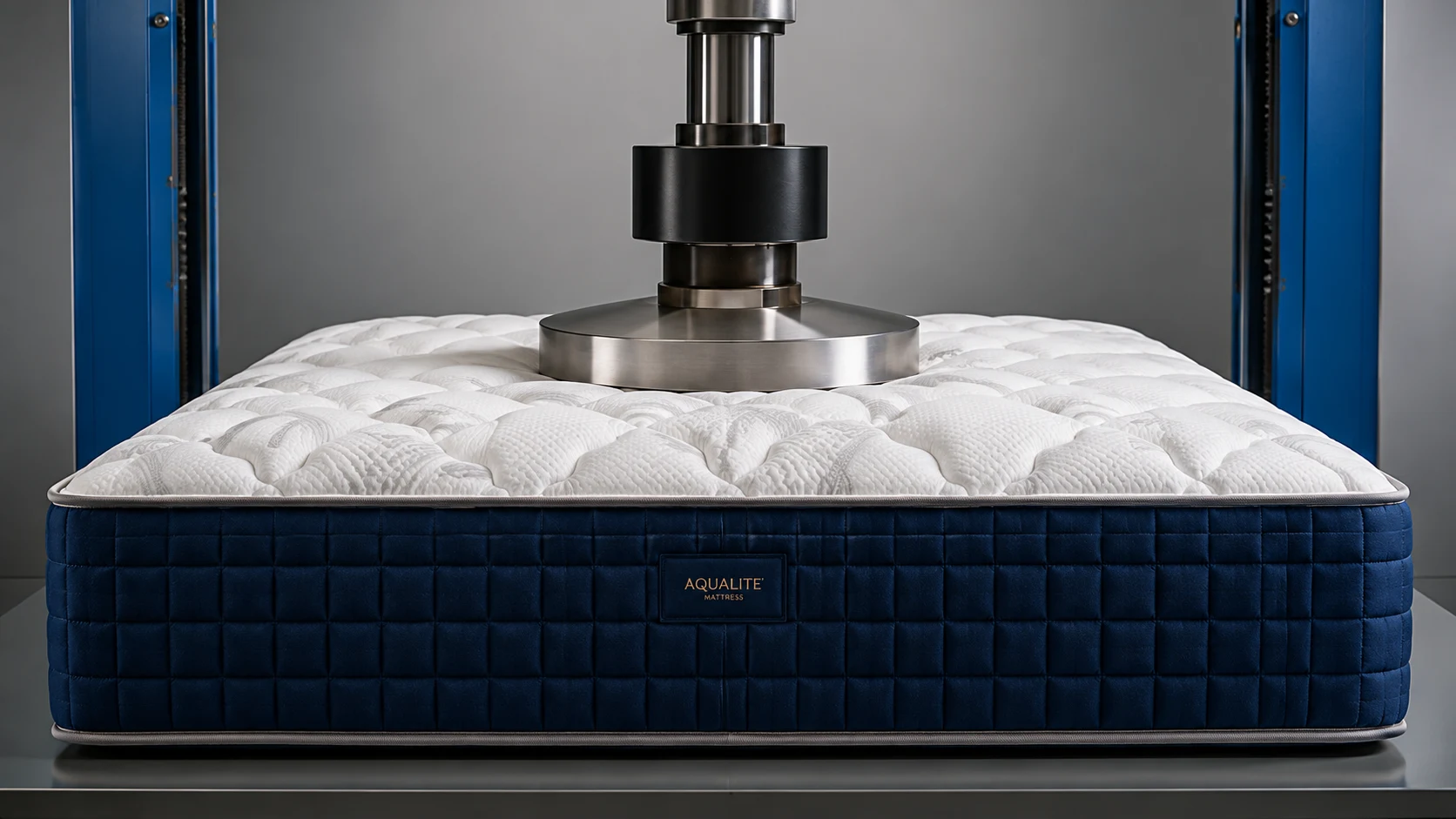
If you take one number away from this section, make it density. A low-density foam will feel identical to a high-density one in the showroom and noticeably different after eighteen months of use.
The cheapest mattress is rarely the lowest cost. Replacement cycles, not unit price, decide what you actually spend per room per year.
3. Get the firmness right — and keep it consistent
Medium-firm suits the widest range of body types, which is why it is the default for hospitality. Firmer options make sense where guests stay longer or where the mattress must carry heavier average loads.
Whatever you choose, specify it in writing and confirm that it is reproducible. The most common complaint we hear from buyers who switched suppliers is not that the first order was wrong — it is that the second order did not match the first.
4. Plan sizes and quantities before you ask for pricing
Bulk pricing is driven by the size mix, not just the total. Twenty units across four sizes is a different quote from twenty units of one size, because each size change means a new cutting and quilting setup.
Work out your room-type breakdown first, then add a small buffer for replacements. Ordering the buffer in the same batch means it will match — ordering it a year later means it might not.
5. Ask what happens after delivery
The specification is only half the decision. Before you commit, get clear answers on lead time for repeat orders, whether custom sizes stay available, how damaged units are handled, and what the warranty actually covers in a commercial setting rather than a domestic one.
Quick checklist before you order
- Use case and expected occupancy defined
- Construction chosen for load, not for price alone
- Foam density and firmness written into the specification
- Size mix and replacement buffer calculated
- Repeat-order lead time confirmed
- Commercial warranty terms in writing
Where Aqualite fits in
We manufacture across all three constructions and every standard Indian size, with custom sizes made to drawing. That means the specification can be built around your requirement rather than around what happens to be in stock — and the same specification can be reproduced on every reorder.
Share your room breakdown and we will come back with a costed recommendation, usually the same day.